|
|
|

home study
| our courses
Home study courses in Egyptology Have you ever considered furthering your studies, but don't
have the time or commitment to attend college or university? Consider these
facts:
| Distance learning allows you to study your
course without being tied down to fixed terms and having to attend
college. You can study when and where it suits you, as there is no
timetable to follow. |
|
| Once you
have enrolled with us, you receive your course materials, text readers and your
projects and assignments. You can now start your course whenever you wish. |
|
|
Your personal tutor is available by phone, fax or email whenever you need
help, advice or reassurance.
|
|
| Projects and assignments are completed and
returned to your tutor for marking. At the end of your course you have an
examination assignment. Once you've successfully completed your course, you are
issued with an overall pass grade and your diploma. It's as simple as that! |
The National Home Study
College offers
several introductory courses on the study of Egyptology and Ancient History. These courses are ideal
for enthusiastic beginners, assume no previous academic knowledge, and are
written in plain and simple English. Discover how home
study can work for you ...
| >> COURSE TITLE |
CODE |
PRICE |
|
|
|
| INTRODUCTION TO
EGYPTOLOGY |
AR03 |
£195 |
| $365* |
| €285* |
|
Drawing on a wealth of historical
sources, this course presents both a traditional and controversial
overview of pharaonic ancient Egypt. Learn about the past, pharaohs, the
people and culture, the dating system and the links with biblical history.
Topics covered within the course include: Ancient Egypt and its history,
Overview of the Kingdoms and Intermediate periods,
New discoveries, new histories,
Egypt and Biblical history,
Egyptian culture - people and communities of the past,
Major tombs and archaeological sites discovered in Egypt,
Egyptian archaeology as a science,
Field archaeology skills,
Site identification, exploration and survey,
Identification and dating of artefacts,
Preservation,
Use of historical sources for reference and verification. |
 |
 |
|
|
|
| >> COURSE TITLE |
CODE |
PRICE |
|
|
|
| EGYPTOLOGY AND ANCIENT
EGYPTIAN STUDIES |
AR04 |
£195 |
| $365* |
| €285* |
A new and exciting course requiring a
basic knowledge of Egyptology and the desire to delve further into this
fascinating subject! Divided into three main sections:
Section One
deals with predynastic and pharaonic Ancient Egypt, the culture, religion,
pyramid, tomb and temple building, mummification and ritual.
Section
Two deals with the archaeological record that provides us with this
knowledge, translating and bringing to life the inscriptions and
hieroglyphs that decorate the walls of tombs, temples etc.
Section
Three examines theories and scholarly literature regarding a wide
range of aspects of the discipline, both accepted and controversial.
Topics covered within the course include:
Early civilisation,
Chronology, the Kingdoms and the Dynasties - establishing dates,
Standard Chronology and Controversial Chronology and the theories
behind them,
Religion, culture and the importance of the deities,
Pyramids and tombs, ritual and mummification,
Hieroglyphs - translation and interpretation,
Theories and facts. |
 |
 |
|
|
|
| >> COURSE TITLE |
CODE |
PRICE |
|
|
|
| COPTIC AND EARLY
CHRISTIAN STUDIES |
AR06 |
£195 |
| $365* |
| €285* |
|
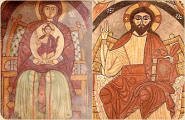
A comprehensive introduction to this
rather "less studied" period of Egyptian history, covering the
establishment of Egypt as part of the Hellenistic and Mediterranean world,
the development of the Coptic language from the Greek and demotic
Egyptian, and the eventual adoption of the Early Christian Church as the
main religion. The Coptic period saw the development of a whole new
culture and ritual and there are numerous sites of both Coptic and
archaeological interest throughout the country. Main topics within the
course include: Egypt 800 BC-200 AD
Greek and Roman influences
Cultural impacts
Art and ritual
Development of the language
Early Christianity in Egypt
Coptic Egypt |
 |
 |
|
|
|
| >> COURSE TITLE |
CODE |
PRICE |
|
|
|
| INTRODUCTION TO EGYPTIAN
HIEROGLYPHS |
AR07 |
£195 |
| $365* |
| €285* |
|
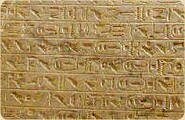
A comprehensive introduction to
hieroglyphs which examines in considerable detail the fascinating
written language of Pharaonic Egypt. Using texts by acknowledged
experts, and examples from actual tombs and temples and papyri,
we bring these magical symbols to life.
The course has been written using
"plain English" and avoiding confusing grammatical terms
wherever necessary, however, a certain amount of English grammar has
had to be included to clarify the Egyptian usage. The course has
been broken down into 11 manageable lessons with an exercise at the
end of each lesson; allowing you to progress at your own speed with
tutorial back up if required. Main topics within the
course include:
Introduction,
Alphabetical signs,
Determinatives,
Gender,
Pronouns,
Pronunciation,
Transliteration,
Past and future tenses,
Numerals and dates,
Cartouches,
Offering formulae, inscriptions,
An aid to drawing hieroglyphs. |
 |
 |
|
|
|
| >> COURSE TITLE |
CODE |
PRICE |
|
|
|
INTRODUCTORY DIPLOMA: The
pyramids and the Old Kingdom pyramid age |
PAR03 |
£195 |
| $365* |
| €285* |
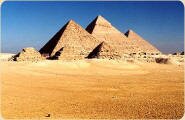
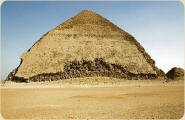
The only surviving of the seven
ancient wonders of the world, the Old Kingdom Pyramids and Sphinx at
Giza are the most familiar of all archaeological sites. For
centuries they were the symbols of the entire Egyptian civilisation.
Mysterious and irresistible to the eye, these monumental structures
suggested to travellers, a religious vision of one of the most
highly refined and evolved of the ancient civilisations. We still do
not know today with exact certainty the techniques that were used to
construct them, but the most recent research and excavations have
thrown on new light on the world that revolved around the building
sites and on the daily life of generations of the designers and
craftsmen who dedicated their lives to these immense constructions.
This new knowledge has allowed archaeologists to draw away the veil
from much of the 'common' history of ancient Egypt. This course is
dedicated to the Great Sphinx and the Pyramids of Giza, the emblems
and glory of the Fourth Dynasty, but also to the earlier Old Kingdom
pyramids and tombs at Saqqara, Meidum and Dahshur. In the light of
the most recent findings, the student is led on a discovery of
perhaps the most fascinating face of the Egyptian civilisation.
Tribute is also paid to the pharaohs who ordered the pyramids'
construction, the treasures found in the most famous tombs, and the
men who have revealed their secrets.
This course offers an intriguing insight into the religious and
burial practices of the Old Kingdom. Accompanied by an illustrated
text with colour photographs and detailed plans of the major sites,
the comprehensive study material incorporates all of the latest
information on the excavations and interpretations of the Sphinx and
the Pyramids and puts them in geological, historical and social
context.
Duration: Approximately 150 hours flexible study. Students work at
their own pace, but by working 6 to 8 hours per week can expect to
complete the course within approx 6 months.
Assessment: 4 optional marked assignments.
Topics covered include:
Introduction to the Old Kingdom,
Chronology,
Principle rulers and events : Djoser, Khufu, Khafre and Menkaure,
Culture,
Religion,
Funerary customs,
Monuments and temples,
The Pyramids,
The Sphinx,
Decline and transition. |
 |
 |
|
|
|
| >> COURSE TITLE |
CODE |
PRICE |
|
|
|
INTRODUCTORY DIPLOMA:
Gods, deities and the mythology of the Ancient Egyptians |
GAR04 |
£195 |
| $365* |
| €285* |
|
Ancient Egypt was a mystical
society with a broad and deep belief in the afterlife and the
existence of many gods to appease and worship. Everyday objects and
animals were deified and worshipped. Even the kings were considered
a divine embodiment of the gods. The tombs, burial sites and
artefacts are an enduring testimony to this fascinating religion.
Less documented, but no less fascinating, were the beliefs of the
ordinary people of Egypt: magic, rituals, festivals, taboos,
superstitions, dreams and oracles reveal how far religion influenced
and enriched their lives.
This course describes the
complex and often confusing relationship between the ancient
Egyptian and their deities. Intended as a comprehensive guide to the
gods and symbols of ancient Egypt, their interpretation, their
significance and their cults, the course answers questions such as
why the jackal represents Anubis, the embalmer god, and why the dung
beetle represents the sun god Khepri. The development of beliefs in
animal divinities and their later depictions in human and hybrid
forms are covered in depth, along with the role of the divine king
and the deification of certain individuals during the course of
Egypt's long history. Ideas about the life after death, the
individual's hope for eternity and the preparations, provisions and
aspects which were regarded as necessary to achieve immortality are
looked at in detail, along with the myths and legends about the
creation of the world and afterlife.
Duration: Approximately 150 hours flexible study. Students work at
their own pace, but by working 6 to 8 hours per week can expect to
complete the course within approx 6 months.
Assessment: 4 optional marked assignments.
Topics covered include:
Ancient Egyptian religion and society,
Principle gods and goddesses,
The creation of the world,
The afterlife,
Immortality,
Divine kings,
Rituals and festivals.
|
 |
 |
*Guide prices: These are shown in US dollars and Euros
and are intended to be used as a guide
only to the equivalent rate in sterling. All
enrolments are processed in sterling and as such, the actual price in US
dollars and Euros will depend wholly upon the exchange rate on the actual day of
processing by your card company.
You can telephone National Home Study on: 0870 242 7141. Our Customer ServiceLine is open every weekday (except bank holidays) between 9am-5pm. See
our "contact us" page for more details.
|
|
|